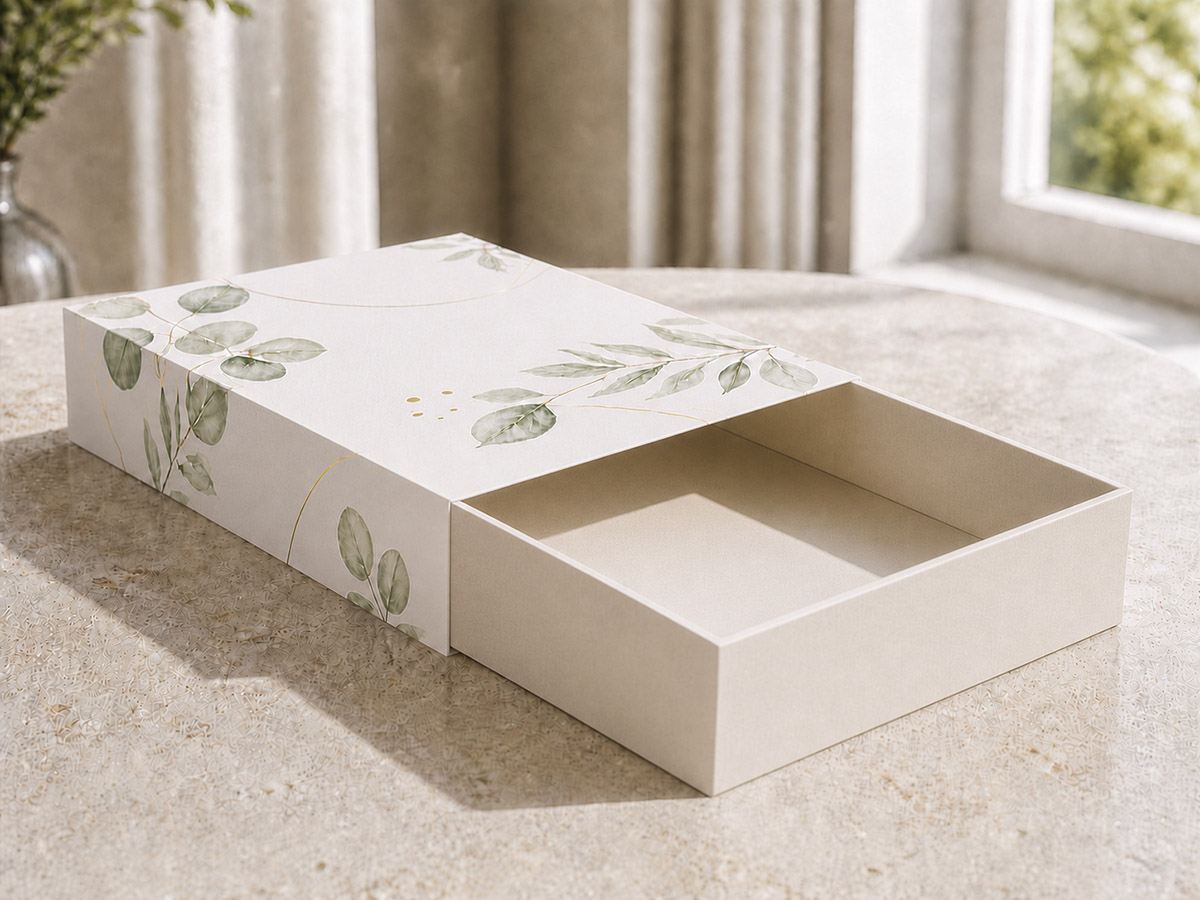
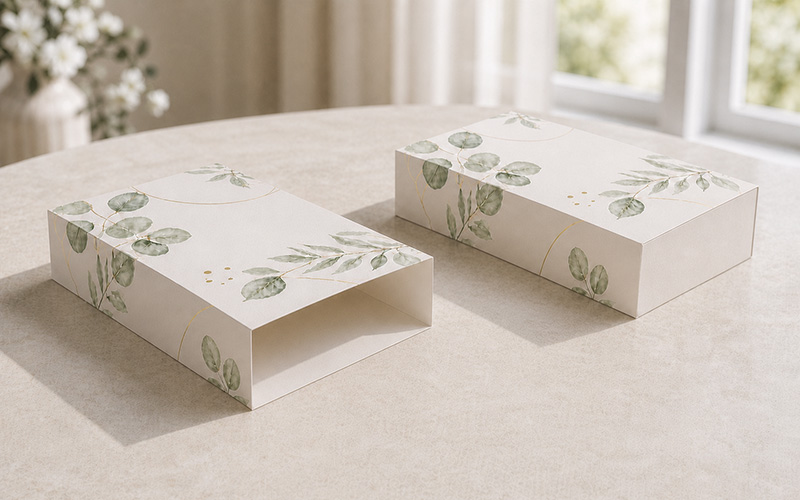
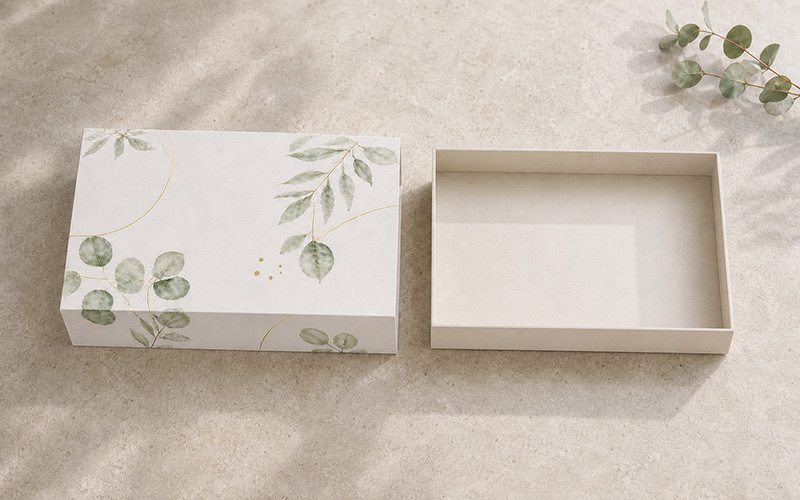
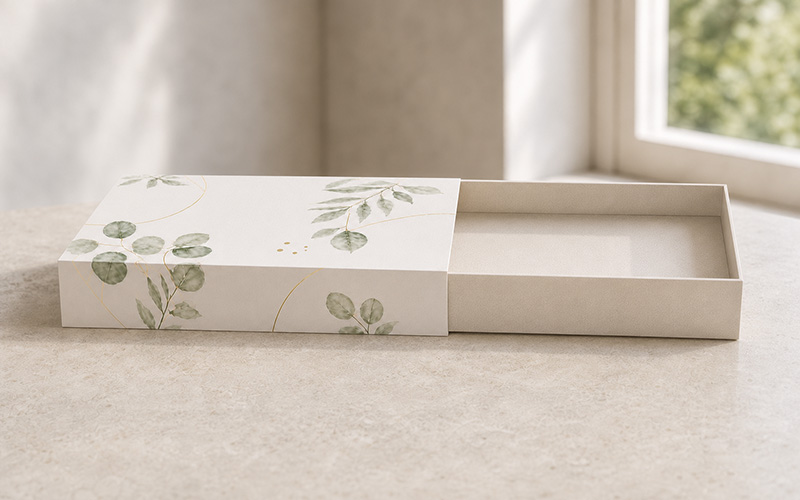
What Are Sleeve Boxes with Inner Tray?
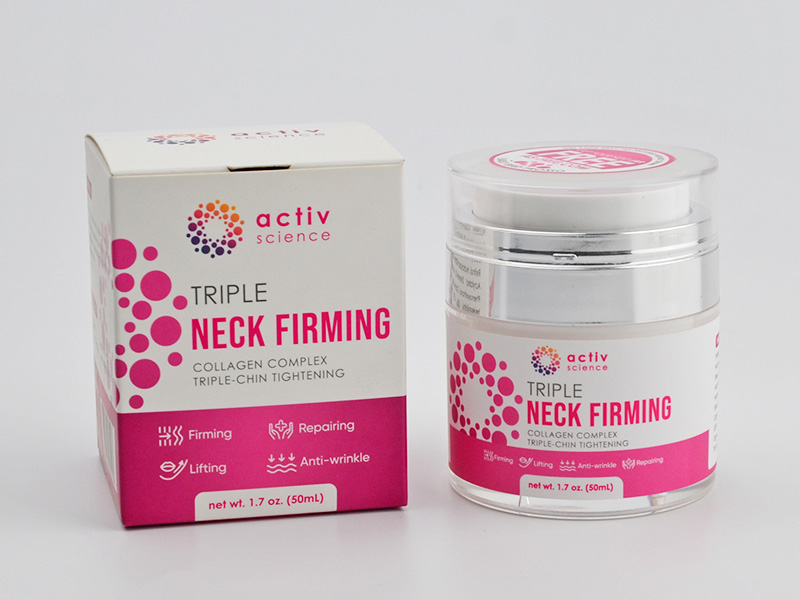
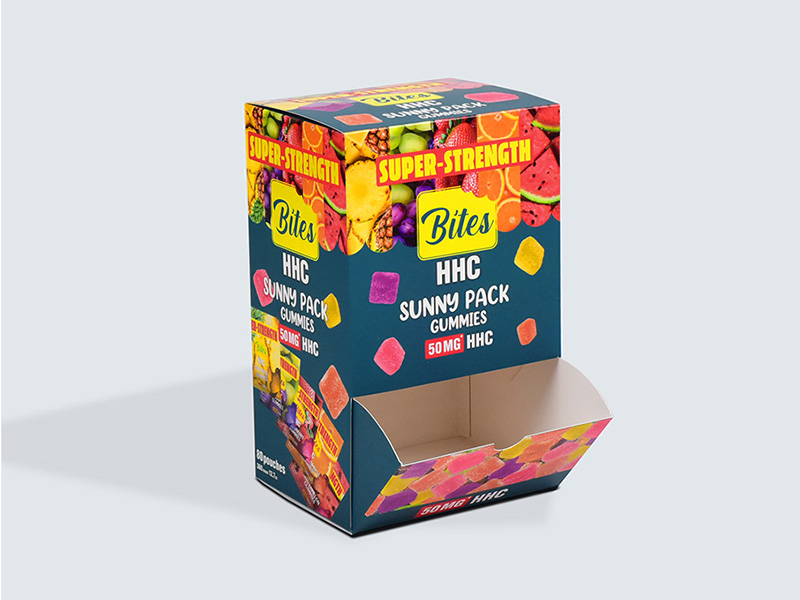
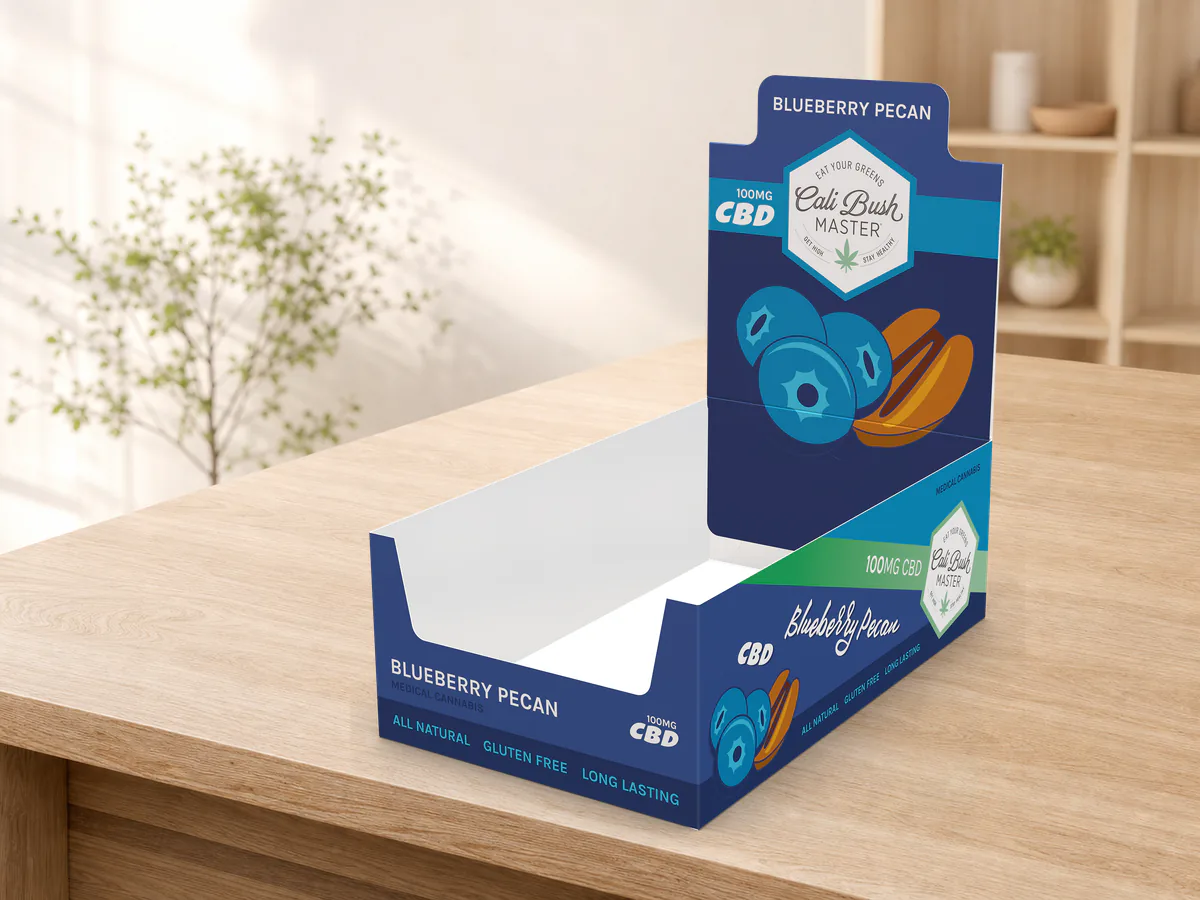
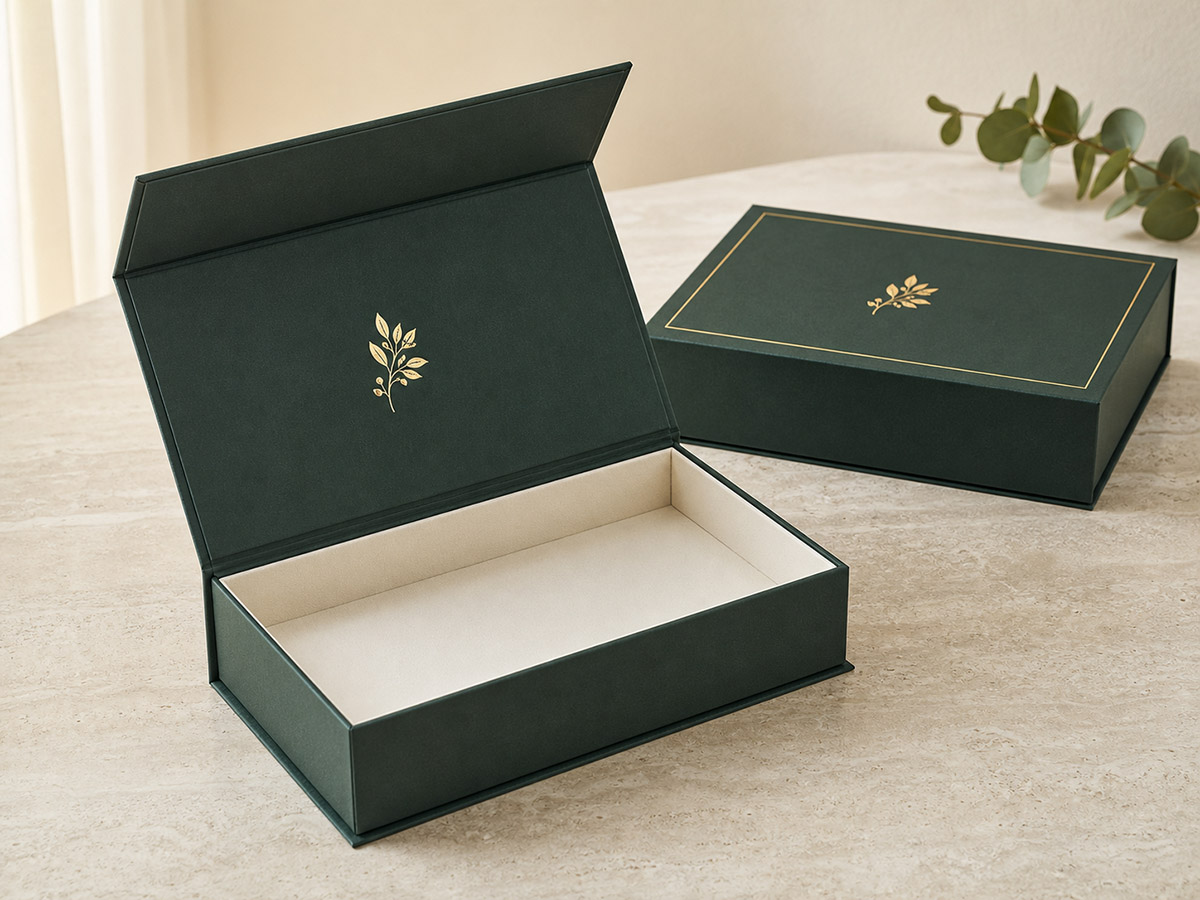
Sleeve boxes with inner tray are hybrid paper boxes that use two different structural parts: a chipboard or greyboard tray inside, and a printed white cardboard sleeve or outer box outside.
This structure is useful when a product needs a stronger, more stable presentation than a folding carton, but the budget does not support a fully rigid magnetic box or luxury gift box.
Material & Structure
The inner tray is usually made from chipboard or greyboard to hold the product in position. The outer sleeve or outer folding box is made from printed white cardboard or SBS paperboard.
Typical combinations include:
- Chipboard tray + printed sleeve
- Chipboard tray + folding outer box
- Greyboard tray + paperboard wrap
- Paperboard insert + outer sleeve for lighter products
- EVA insert added when product fit needs more precision
This combination gives brands a practical middle option between low-cost folding cartons and expensive rigid boxes.
Why This Structure Is Useful
1. Stronger Product Support
The chipboard inner tray helps hold bottles, jars, accessories, or product sets more securely than a simple paperboard insert.
2. Lower Cost Than Full Rigid Boxes
Only the tray uses thicker board, while the outer sleeve can stay in a more cost-efficient paperboard structure.
3. Better Shipping Efficiency
Compared with fully assembled rigid boxes, some sleeve-and-tray structures can reduce weight and shipping volume depending on the design.
4. Premium Presentation Without Full Luxury Cost
The tray creates a structured unboxing experience, while the printed sleeve carries brand graphics and retail information.
When to Choose This Box Type
This structure is a good fit when:
- Product protection needs are higher than a basic folding carton
- The brand wants a gift-set feel but needs better cost control
- Multiple products need to sit neatly in one package
- Full rigid box MOQ, lead time, or freight cost is too high
- The box needs better perceived value without becoming a luxury handmade box
It is especially useful for cosmetics, supplements, electronics accessories, and retail sample sets.
Practical Considerations
Sleeve boxes with inner tray are more complex than standard folding cartons, so they require more structure planning.
Key points to confirm include:
- Product size and weight
- Tray depth and product fit
- Sleeve opening direction
- Insert material and tolerance
- Freight method and carton packing
- Assembly workflow before packing
The result is often a strong, cost-controlled structure that sits between folding cartons and rigid boxes.
Why Choose Us?
- Practical recommendations on tray thickness and outer sleeve material
- Dieline and product-fit review before sampling
- Support for white cardboard sleeves, chipboard trays, inserts, and pull tabs
- Cost comparison against folding cartons and magnetic rigid boxes
- Coordination with cosmetic cartons, labels, pouches, and mailer boxes
We help brands use sleeve boxes with inner trays when they need stronger structure, better product presentation, and more controlled cost than a full rigid box.